
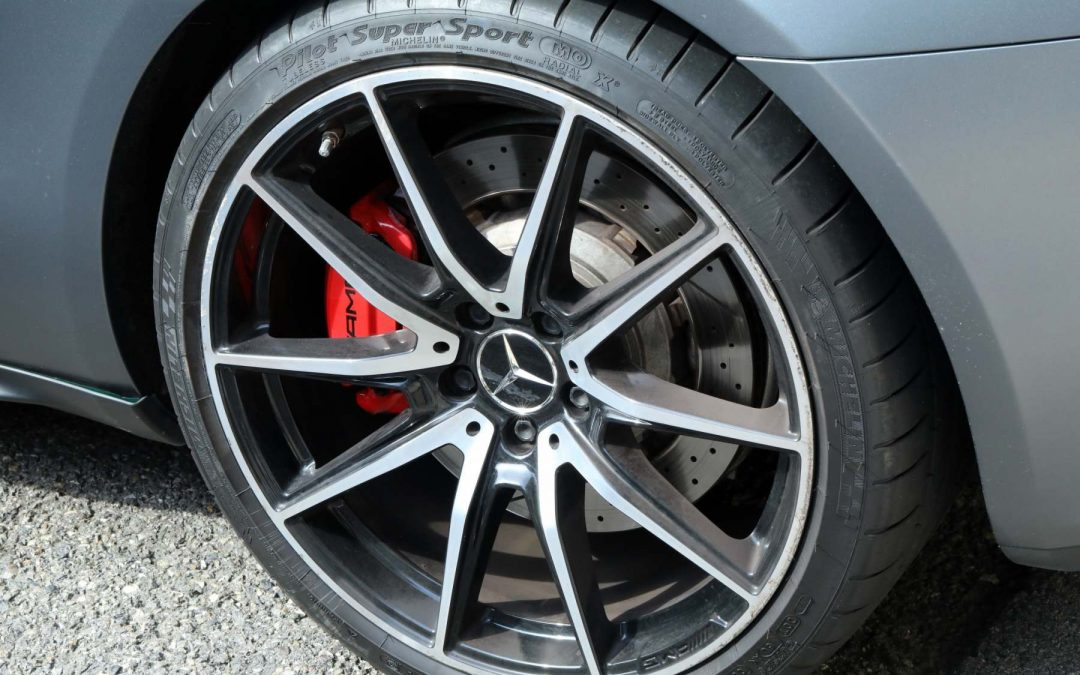
Nobody quite gives it much thought when the car nudges against the kerb when parallel parking or edges a little too close to a raised verge on a narrow street. Such small, everyday moments feel harmless, but alloy wheels have a long memory. The way a car gets parked day after day plays a bigger role in their condition than most car owners/ drivers realise.
Scuffed edges, hairline cracks, and corrosion aren’t usually a result of a single mishap or dramatic incident. They build up gradually, which eventually leads many drivers to alloy wheel refurbishment in Essex.
The Kerb: A Wheel’s Nemesis
Kerbs are often the most common culprit behind damaged alloys, and it’s often too minor in the moment. A gentle scrape while parallel parking might leave nothing more than a faint mark at first glance, yet when it gets repeated, it wears down the protective coating on the wheel’s edge. This, in turn, exposes the metal beneath to moisture and road salt.
Once the protective layer is compromised, corrosion sets in fast, especially during the rainy months. So, what begins as a barely visible scuff/ scrape can, over months of repeated contact, lead to flaking paint and even structural weakening around the rim’s edge.
Tight Spaces and the Temptation to Cut Corners
Parking in narrow residential streets, multi-storey car parks, and/ or cramped supermarket bays needs a certain amount of risk-taking. Cutting corners too sharply or misjudging distance in tight quarters often results in the wheels making contact with concrete bollards, parking barriers, or even with the base of support pillars.
Such impact causes more damage than gentle kerbing does. In fact, it can even cause visible deformation along the wheel’s rim. Even if the damage isn’t immediately obvious, repeated minor impacts in tight spaces can weaken a wheel’s structure in the long run.
Uneven Surfaces and Pothole Parking
Parking on uneven surfaces/ areas, such as a poorly maintained driveway, a gravel verge, or even a pothole-riddled side street, puts stress on alloy wheels. Constant exposure to loose stones, debris, and rough surfaces can gradually scratch the alloy wheels and even dull the wheel’s finish.
This slow, cumulative wear is precisely why so many drivers eventually seek out a reliable alloy wheel refurbishment service in Essex, and rightly so.
Prevention Habits Worth Adopting
Small changes in parking habits can undoubtedly extend a wheel’s lifespan. So, try taking a few extra seconds to judge distance from a kerb and go for wider parking bays when available. Avoid unnecessarily tight manoeuvres to reduce the cumulative risk of damage over time. Also, try washing wheels from time to time. This helps remove corrosive grit and salt before it has the chance to settle into existing scratches.
That said, even with careful parking and maintenance habits, alloy wheel wear is often inevitable over years of driving. So, when damage does eventually appear, a professional alloy wheel refurbishment in Essex can be a great way out. It not only restores the appearance and structural integrity of affected wheels, but also addresses everything from surface scuffs to deeper corrosion.
Key Takeaway
Alloy wheels go through far more daily stress than most drivers or even car owners actually acknowledge. In fact, people’s parking habits play a notable role in how well they hold up over time. However, when the damage does occur, seeking out a trusted alloy wheel refurbishment service in Essex makes sure that the wheels are restored right.
Smart Wheels offers a mobile service, so we come to you: whether that’s home or work. We offer everything from polishing and diamond cutting to powder coating, colour changes, and full crack and buckle repairs, often with same-day turnaround. All work comes fully guaranteed, so there’s genuine peace of mind. Spotted a scuff on the wheel that’s been bothering you? Get in touch with us.
Recent Comments